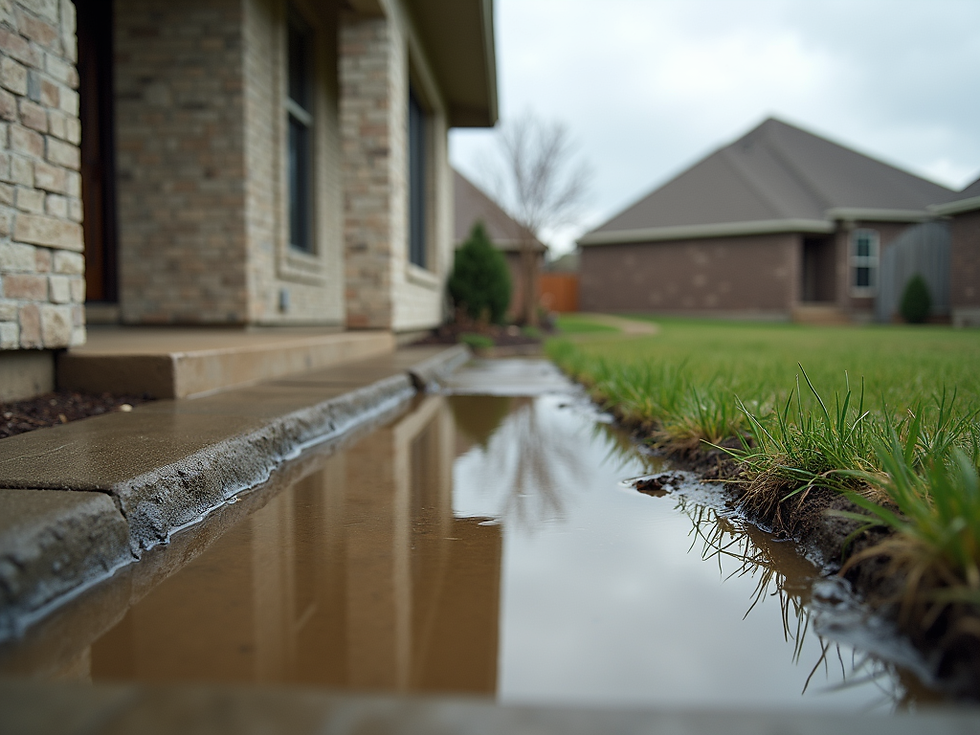
"How to Fix Standing water in your Austin Backyard"

If you've lived in Austin for long enough, you may have noticed that after a strong rain comes through, your yard suddenly transforms into something reminiscent of a small pond.
While some storms are naturally heavier than others, sudden Austin downpours can quickly overwhelm a yard. However, if you consistently notice water pooling in your yard, it may be a sign of a larger drainage issue below the surface.
While your garden may have needed a good and well-deserved soak and the wildlife seems to have enjoyed the post-rain bath, an excess of standing water can then become muddy, messy, and downright inconvenient.
Not only is standing water frustrating, it can lead to a number of issues that can have a greater long-term effect. It might not seem as though this annoyance could do such a thing, but over time it can cause pretty devastating structural instability and majorly devalue the property.
If water is standing in your yard for longer than 24 to 48 hours after rainy weather, it might hint at a deeper complication that will require careful, professional attention.
Recognizing these indicators early can prevent minor inconveniences from escalating into major financial burdens that nobody wants to endure.
Below are some signs homeowners in Austin should pay attention to if this is something you've noticed having an effect on your property.
Backyard Drainage Issues To Watch For
An excess of mosquitoes: Standing water is the perfect breeding ground for these pests.
Erosion in your yard: Noticeable soil shifting across your landscaping.
Soggy or dying grass: Excessive moisture can drown your lawn's root system.
Muddy spots: Persistent wet spots that never seem to dry out.
Water pooling near the foundation: This can lead to serious and costly foundation damages.
There are a number of reasons why a lot of water accumulation may be happening near the foundation of your Austin home. Some of these problems can have quick fixes and can be remedied fairly easily if caught early on.
That said, allowing continuous flooding to plague your yard without attention often results in far more significant and costly complications.
Over time, you might face serious foundation damage, noticeable erosion across your landscaping, and a much steeper financial burden for the repairs.
Figuring out the root cause — whether it be compacted soil, clay-rich Texas soil, poor yard grading, or inadequate drainage systems — is essential for long-term prevention of these larger issues.
Why Your Backyard Holds Water After Rain
Compacted soil: Over time, heavy foot traffic or construction can pack soil so tightly that water cannot penetrate the surface and effectively drain out.
Clay-rich soil, common in Central Texas: The heavy clay content in Austin soils naturally retains water and drains very, very slowly.
Poor yard grading: If your lawn is not sloped properly, and even worse, towards your home, gravity will inevitably pull water toward your foundation.
Broken or inadequate drainage: Older drainage systems or clogged pipes can fail to direct runoff appropriately during heavy Central Texas rainstorms.
There are a number of things you can try as easy fixes that you may be able to do yourself to fix this issue. Taking preemptive measures early on can save your landscaping and foundation from permanent damage resulting in expensive repairs.
DIY Solutions Homeowners Can Try
Downspout extension: Some homeowners notice their gutters drain too close to their homes. Something as simple as adding an extension to the downspouts may fix this issue, helping water drain more evenly and effectively.
Filling low spots: If you see that water only pools in partial areas, leveling your soil may allow for better drainage. By filling in these sunken areas, you can eliminate "mini-ponds" before they become mosquito breeding grounds. However, this might just act as a bandaid and not solve the underlying issue, especially if you notice that water begins pooling in other areas of your yard.
Aerating your soil: If you're lucky enough to not have extremely tight and compacted clay soil in your Austin yard, something as minor and simple as agitating and aerating your soil might solve the flooding problem.
If you've exhausted all of these options and the issue persists or worsens, it is likely time to call a professional.
When to Call a Professional
If any of these sound familiar, it's time to bring in an experienced drainage contractor like Scott Lockhart Drainage Contractor, who has been solving exactly these problems across Austin and Central Texas since 1984:
Water sits for longer than 24-48 hours after rain
Water puddles form close to your foundation
You notice major erosion in your lawn or on your foundation
Flooding happens every time it rains
DIY fixes do not work
With over 10,000 drainage projects completed across Travis, Williamson, and Hays counties, Scott Lockhart Drainage Contractor has the experience to diagnose the root cause — not just treat the symptoms.
Protect Your Yard Before Things Worsen
The sooner drainage issues are caught, the easier and cheaper they are to fix.
If you're facing consistent standing water in your Austin backyard, don't wait for the problem to reach your foundation. A professional drainage assessment can identify exactly what's happening underground and provide a lasting solution tailored to your property.
Ready to fix your drainage problem for good? Scott Lockhart Drainage Contractor has been Austin's trusted drainage expert since 1984.
📞 Call today: 512-914-5177 🌐 Visit: scottlockhartdrainagecontractor.com 🎬 Watch the Stormwater Specialist series on YouTube for more drainage tips and expert insights from 40 years in the field.
Scott Lockhart Drainage Contractor — Serving Austin, Round Rock, Cedar Park, Georgetown, Pflugerville, and all of Central Texas since 1984.