A Drainage Inspection Explained: What It Is,What It Checks, and Whether You Need One
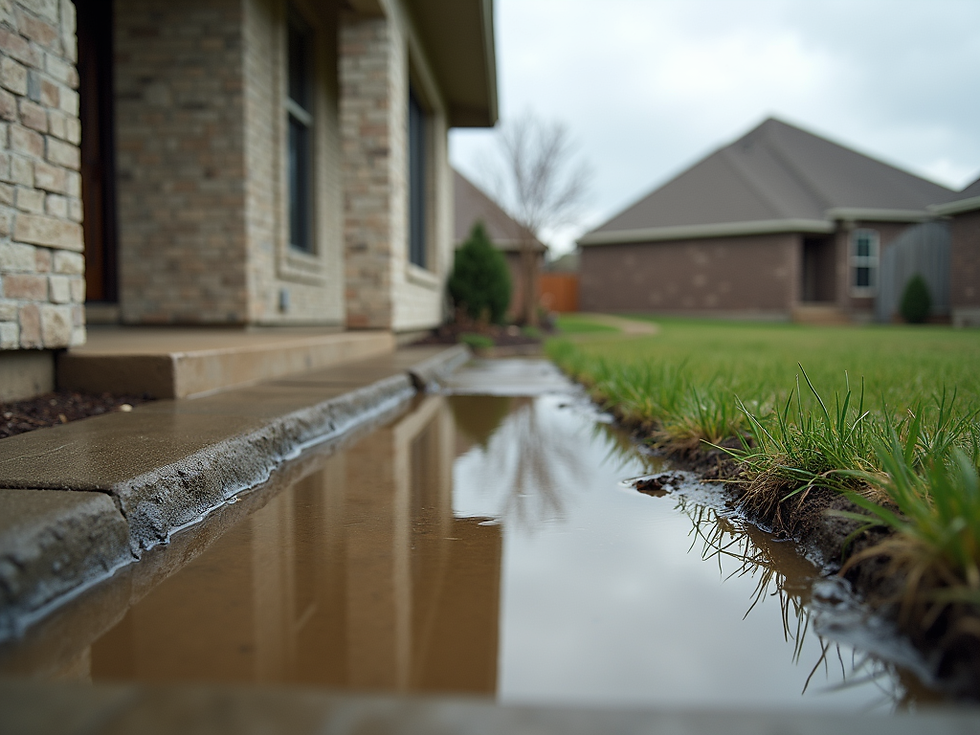
If you’ve noticed water sitting in your yard for longer than you think it should, or maybe even
pooling near your foundation, you’ve probably wondered if it’s time for someone to take a look at your drainage system. Homeowners might think that a drainage inspection is only necessary when things get really bad. The truth is, a drainage inspection often catches problems before they become expensive repairs.
"What exactly are you looking for during a drainage inspection?"
It's a fair question! If you've never had one done before, it can sound a little mysterious.
Let's go through what a drainage inspection actually involves and why it can save you a lot of headaches down the road.
What Is a Drainage Inspection?
A drainage inspection is essentially a thorough walk-through of how water moves (or doesn't move) across your property. A contractor looks at everything from your yard's slope and grade to your gutters, downspouts, French drains, drainage pipes, and any catch basins or surface channels that already exist on your property. The goal is to figure out where water is coming from and what’s getting in the way of taking it where it needs to go.
Think of it like getting your car inspected. Everything might seem fine from the driver's seat, but a mechanic underneath the hood can spot a problem before it leaves you stranded. Same idea here.
Signs You Probably Need One:
While some red flags are impossible to miss like water pooling on your driveway, soggy lawn patches, or standing water after a storm, other drainage issues show up in less obvious ways.
You might still need an inspection if you notice some of these more subtle signs:
● Musty odors near exterior walls or your foundation
● Gutters that continue to overflow even after cleaning
● Erosion patterns or bare patches where grass won't grow
● Water stains or moisture in your garage or crawlspace
If any of those sound familiar, an inspection is worth the call. Even if there aren’t any visible red flags, scheduling a proactive inspection is a smart move for anyone recently finishing a yard renovation that altered the grade or for those in the process of purchasing a new home.
What Gets Checked During the Inspection?
Here's what a good drainage contractor is actually looking at when they come out:
● Existing drainage systems: If you've got a French drain, a catch basin, or underground drainage pipes already, those get checked for clogs, root intrusion, shifting, or any sections that have settled and lost their pitch. A French drain that can't drain isn't doing much.
● The grade and slope of your yard: Proper drainage requires that water needs to move away from your house. An inspector will verify if your property’s landscape is actually
sloped correctly, as even minor grading issues can lead to significant foundation trouble
if the land directs runoff back toward your walls.
● Gutters and downspouts: These are the first line of defense. The inspector checks for
clogs, damage, improper pitch (your gutter should slope slightly toward the downspout,
not away from it), and whether your downspouts are actually discharging water far
enough from the foundation. Downspouts that dump water two feet from your house
aren't doing you any favors.
● Surface drainage and yard flow: This involves observing how runoff moves across
your turf, through garden beds, and around stone features or low-lying areas. While
certain trouble spots stand out even in dry weather, a professional eye can identify
hidden issues by mapping the actual topography of your land.
● The foundation perimeter: Moisture around your foundation is a big deal. A drainage
inspection will look for signs of water intrusion, saturated soil up against the house, and
whether the soil grade has shifted over time in ways that are now working against you.
● Hardscape and impervious surfaces: Driveways, patios, and walkways change how
water flows across your property. If those surfaces are pitched incorrectly or don't have
adequate drainage, that water has to go somewhere, and it usually finds somewhere
inconvenient.
What Happens After the Inspection?
Once the contractor has a complete picture, you'll get a rundown of what was found and what, if anything, needs to be done about it. To keep things transparent, we walk with you through the entire inspection process, or record it on video if you can’t be there. Scott will point out all of the trouble spots so you can see what we do, and understand the specific reasoning behind our suggested solutions.
The important thing is that you're making decisions based on an actual assessment of your
property, not a guess. A lot of drainage work that goes sideways started with someone
assuming they knew where the problem was without really looking.
Let's Take a Look!
If you're dealing with standing water, er

osion, foundation concerns, or drainage problems
anywhere in Austin or Central Texas, Scott Lockhart Drainage Contractor can help.
Give Scott a call at 512-914-5177 to schedule a drainage inspection and get ahead of water
problems before they become costly repairs.