Drainage vs. Foundation Problems: How to Tell the Difference
Updated: Aug 27
You've noticed some water pooling in your yard after rain. Maybe you've seen some cracks showing up on walls or doors that suddenly don't close right. Your first thought might be, "Is my foundation failing?" That's a scary question — and honestly, it might not even be the right one.
Here's something many homeowners don't realize: drainage problems and foundation problems share a lot of the same symptoms. However, drainage issues are almost always cheaper and easier to fix. Often, what looks like a foundation problem is actually a drainage problem in disguise.
Not sure which one you're dealing with? Here's how to tell the difference, what signs to look for, and when to call a pro.
Understanding the Connection Between Drainage and Foundations
Before diving into the symptoms, it's essential to understand how these two problems usually overlap.
Central Texas is known for its clay-heavy soil. This soil expands when wet and shrinks when dry. When moisture levels around your home aren't consistent, the soil underneath your foundation can shift. Over time, this shifting can affect the structure of your home.
In many cases, poor drainage creates the conditions that lead to foundation movement in the first place. Therefore, it's crucial to look at both systems together, instead of assuming they're separate issues.
Signs You Have a Drainage Problem
Drainage issues are usually much simpler to spot before they escalate. Pooling water in your yard is easier to see than the hidden structural shifts occurring underground, which would signal a foundation concern.
Watch for these warning signs:
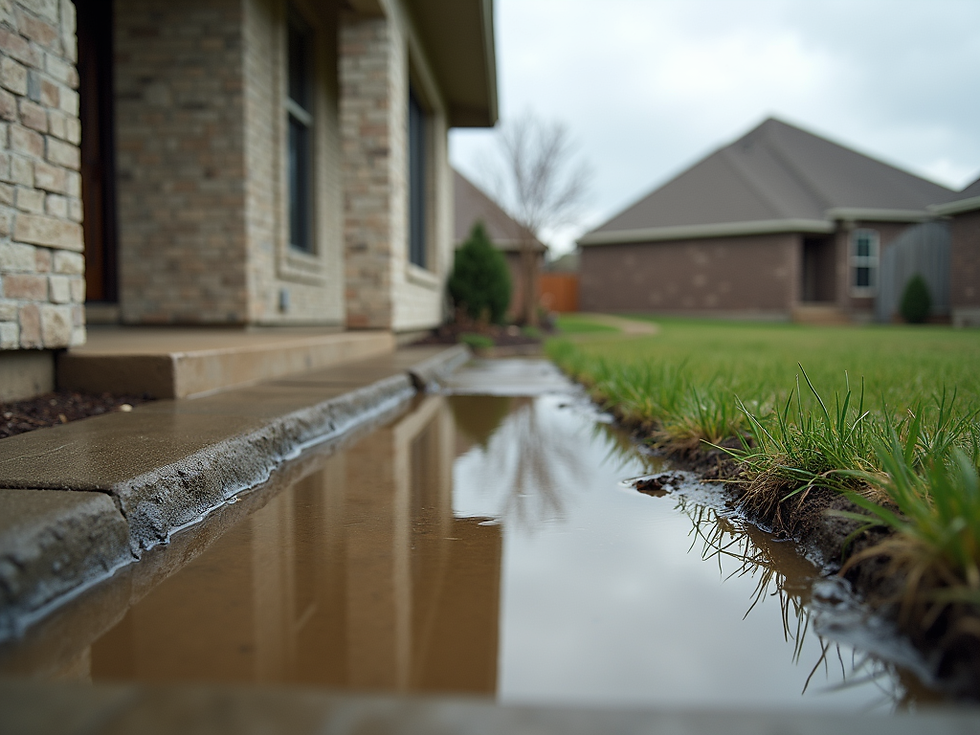
Standing water in the yard after rain
Soggy or muddy areas that stay wet for days
Water collecting near your foundation
Soil erosion around your home
Water running toward the house instead of away from it
Increased mosquito activity from stagnant water
Water entering crawl spaces or low areas
Ask yourself:
Does water pool in the same area every time it rains?
Do your downspouts discharge close to the foundation?
Is your lawn still soggy well after the neighbors' yards dry up?
Are you seeing soil wash away or trenches forming after heavy rain?
If you answered yes to several of these questions, drainage is likely the issue. If the house still feels solid, the doors open and close fine, and there are no major cracks, chances are you're dealing with a drainage problem that hasn't caused foundation damage yet. This is the best-case scenario because you can fix it before it becomes something bigger.
Signs You Have a Foundation Problem
Foundation issues usually show up inside the home before they're obvious outside. Common indicators include:
Cracks in drywall
Cracks above doors and windows
Doors that "stick" or won't latch
Windows that are difficult to open
Uneven or sloping floors
Gaps between walls and ceilings
Cracks in brick or exterior masonry
Separation around trim or molding
A single hairline crack isn't always a reason to panic. However, multiple cracks, growing cracks, or several symptoms together may point to foundation movement. For example, a crack above a doorway, a sticking door nearby, and floors that feel uneven in the same area could indicate a problem. If you're spotting several of these signs at once, it's worth having a drainage professional assess the situation first. Often, what looks structural traces back to water, and Scott can tell you which problem you're actually dealing with before you ever pay for foundation work.
The Link Between Drainage and Foundation Problems
This is where things get tricky. Many homeowners think they're choosing between a drainage problem and a foundation problem when, in reality, they often have both.
Here's a common scenario:
Water repeatedly collects near the foundation.
Clay soil absorbs the excess moisture and expands.
Dry weather arrives, and the soil contracts.
The foundation experiences repeated movement.
Cracks and structural symptoms begin to appear.
At that point, repairing the foundation without correcting the drainage issue is treating the symptom instead of the cause. The conditions that created the problem are still present.
FAQ From Homeowners
What if it's both?
A lot of what we encounter has been building up for years. Water drains toward the house instead of away from it. Soil expands, then shrinks, then expands again. The foundation moves. Now the homeowner has both a drainage problem and some foundation damage.
Should I fix the drainage or the foundation first?
Drainage first, always. Repairing a foundation without addressing the underlying drainage issue means the same problem will return. Most foundation repair companies will tell you that if the drainage isn't fixed, their repairs won't hold for long.
Does homeowner's insurance cover drainage or foundation repairs?
Most policies usually exclude both unless the damage happens suddenly and accidentally. However, it's worth reviewing your policy to be sure.
When to Call a Professional
Most homeowners assume the worst when they see cracks or shifting. However, a lot of what looks like a foundation emergency is a drainage problem that's very fixable — especially if you catch it early.
If you're in Austin or anywhere in Central Texas and you're not sure what you're dealing with, give Scott Lockhart Drainage Contractor a call at 512-790-8564. We'll take a look and give you a straight answer — no upselling, no pressure, just an honest read on what's going on with your yard and your water.
Conclusion
Understanding the relationship between drainage and foundation issues is crucial for homeowners. By recognizing the signs of both problems, you can take action before they escalate. Remember, addressing drainage issues early can save you from costly foundation repairs down the line.
If you suspect you have a drainage problem, don't hesitate to reach out to a professional. The sooner you act, the better your chances of protecting your home.
---wix---

---wix---