"How does below-grade waterproofing work in Central Texas?"
Updated: Sep 3
Below-grade waterproofing protects everything beneath ground level — foundations, basements, crawl spaces, and retaining structures — by doing two jobs at once: blocking water from touching the structure, and moving that water somewhere safe. In Central Texas, where expansive clay soil swells against below-ground walls with every rain, the second job matters as much as the first. A barrier alone eventually loses to standing water; a barrier paired with drainage lasts.
Scott Lockhart Drainage Contractor has been solving below-grade water problems in Austin and Central Texas since 1984 — more than10,000 projects, and nearly all of them come down to the same principle: control where the water goes.
The Central Texas Problem: Clay That Won't Let Go
Most of the Austin area sits on expansive clay. When it rains, that clay absorbs water, swells, and presses against anything below grade — foundation walls, basement walls, crawl space piers. When it dries, it shrinks and pulls away, opening gaps that funnel the next rain straight down against the structure. That swell-shrink cycle is why below-grade waterproofing here can't be copied from playbooks written for sandy-soil states. It has to manage pressure, not just moisture.
The Three Layers of a Working System
1. The barrier: keep water off the structure
On the positive (soil) side, below-grade surfaces are protected with waterproof membranes and coatings that stop moisture from migrating through concrete or masonry. In crawl spaces, the same principle takes the form of sealed vapor barriers — see our Crawl Space Encapsulation Systems page for how that works under pier-and-beam homes.
2. The drainage: give water a better place to go
This is the layer that separates systems that last from systems that fail. Water collecting against a below-grade wall builds hydrostatic pressure, and pressure finds every weakness. Relief comes from drainage installed at the base of the problem: French drains that collect subsurface water in gravel and perforated pipe, channel and area drains for surface flow, and discharge routes that carry everything downhill and away. Our drainage systems page covers the full toolbox.
3. The grading: solve it before it starts
The least expensive waterproofing on any property is slope. Ground that falls away from the structure sends the bulk of rainwater away before it ever reaches below grade. On many Central Texas projects, regrading the exterior is step one — we lower and re-slope grades so the barrier and drains only have to handle what the surface can't shed.
What Below-Grade Waterproofing Protects
Foundations — keeping clay moisture cycles from working against slabs and beams; closely tied to foundation repair and prevention
Crawl spaces — dry framing, better air, no standing water under the house
Retaining walls — walls fail from trapped water far more often than from soil
Finished below-grade spaces — the rare Austin basement, cellar, or sunken living area
How to Know If You Need It
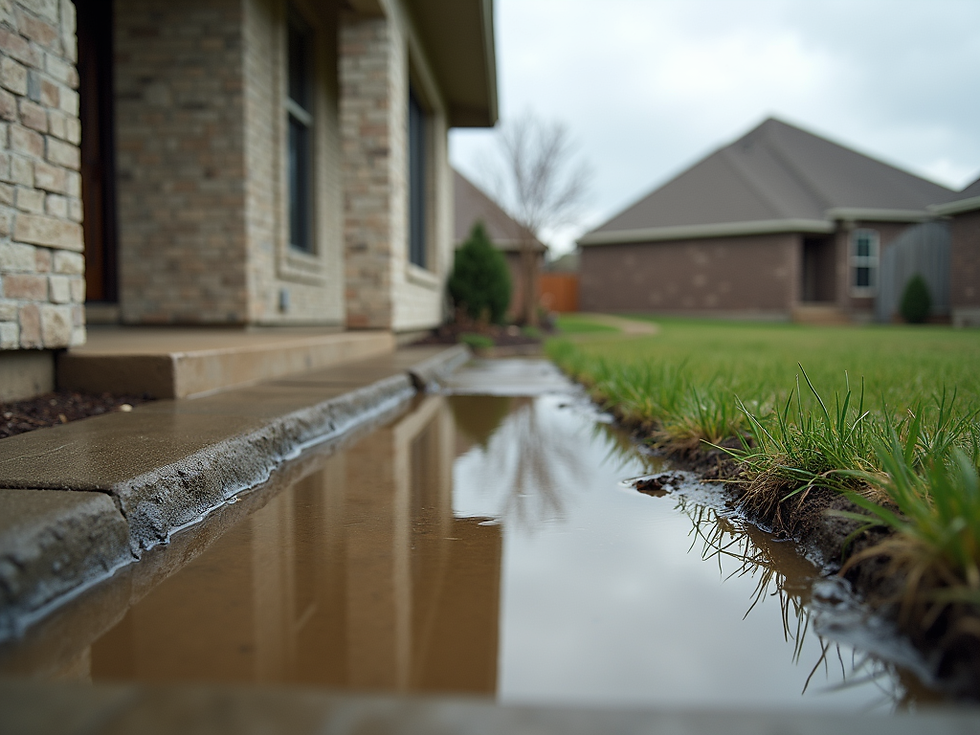
Musty smells under the house. Damp or effloresced (white-stained) below-grade walls. Water pooling against the home after rain. Doors and floors that shift with the seasons. Any one of these is the below-grade conversation starting — and catching it early is dramatically cheaper than repairing what water does over years.
Get a Straight Answer First
Every property drains differently, which is why we diagnose before we design and design before we build. If you're seeing moisture below grade — or buying a home and want the crawl space and foundation read properly — start with an inspection.
Call Scott directly for a free consultation: 512-790-8564 Scott Lockhart Drainage Contractor — serving Austin, Dripping Springs, Wimberley, Kerrville, and Fredericksburg since 1984.