Drainage, Landscaping, or General Contracting: Who Actually Fixes What?
Updated: Aug 10
Drainage, landscaping, or general contracting — figuring out who actually fixes what can be tricky. Each professional will give you a confident answer. Ask a landscaper about your soggy backyard, and you'll hear about grading and plant beds. Ask a general contractor, and it's patios and pergolas. Ask a drainage contractor, and they'll mention French drains and downspouts.
No one is trying to mislead you. They're all viewing your yard through their specific lens. You might need all three services, but understanding the differences upfront can save you time and money. Instead of calling the first name you find, it's better to know who to contact for your specific issue. This way, you won't be surprised a year later when the same wet spot reappears.
Let's clarify who is responsible for what. Even if you end up calling someone else entirely, you'll at least know which professional makes the most sense for your situation.
Understanding Landscapers
Landscapers are experts in plant growth, aesthetics, and yard arrangement. They focus on making your yard visually appealing. Some landscapers understand grading and surface water, and a skilled one might reshape a slope or add a swale as part of a larger redesign.
However, most landscaping companies prioritize aesthetics over water management. When faced with pools of water after a storm, their instinct may be to suggest "more mulch" or "a little regrading." This might seem like a solution for one season, but the water often returns.
Call a landscaper when:
The issue relates to slope, plant choice, or overall yard design.
You want to reshape the yard for aesthetics and usability.
Drainage is a secondary concern rather than the main issue.
The Role of General Contractors
General contractors oversee construction and renovation projects that involve multiple trades. They coordinate electricians, plumbers, concrete crews, landscapers, and drainage contractors as needed.
Call a general contractor when:
You're building a new patio, deck, or pergola.
You're planning an outdoor kitchen.
You're undertaking a large backyard renovation or home addition.
Your project involves multiple trades that need coordination.
If your project includes drainage work, it should typically be addressed first. Otherwise, you might end up building on top of an unresolved water problem.
The Importance of Drainage Contractors
This is the trade that most homeowners overlook. A drainage contractor's job is to trace where water comes from, where it should go, and why it isn't getting there. In Central Texas, where clay soil and rapid runoff exacerbate the issue, the solution might involve:
Channel drains
Properly installed downspout extensions
A comprehensive stormwater plan for properties that struggle with drainage
The advantage of hiring a drainage contractor lies in their diagnostic skills. They can determine where the water is going and how to intercept it before it becomes a larger issue.
Call a drainage contractor when:
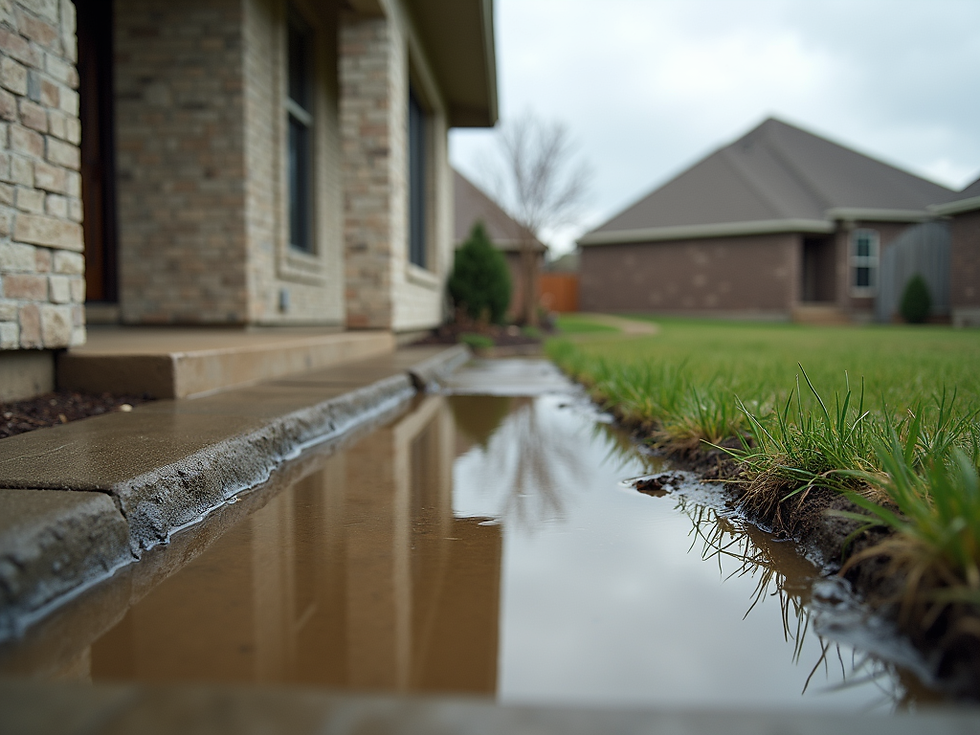
Water is pooling in your yard.
Your foundation remains damp.
Your yard holds water after storms.
Soil is washing out of beds or off slopes.
The Gray Area: Understanding the Overlap
Many successful projects utilize two or even all three trades. A drainage fix might require regrading that a landscaper would typically handle. Conversely, a backyard renovation might need drainage work first to ensure the fix lasts.
This overlap is why many people are confused about whom to call. The trades aren't neatly divided; they simply focus on different aspects of the same problem. Here's a practical example:
A homeowner wants a new patio, so they call a general contractor.
The GC begins digging and discovers that the yard already holds water after every rain.
The project pauses while a drainage contractor resolves the water issue.
The GC resumes the project on solid, dry ground instead of pouring a slab over a swamp.
This is the ideal scenario. The unfortunate version skips that crucial step, leading to issues like a sinking patio corner a year later.
Common Mistakes Homeowners Make
Homeowners often make several common mistakes when addressing drainage issues:
Fixing the yard, not the water. Regrading or adding plants can temporarily mask a drainage issue, but it rarely solves the underlying problem.
Building before diagnosing. Pouring a patio or addition without correcting drainage first almost always leads to redoing work later.
Assuming it's just how Texas soil is. While expansive clay is a reality, many drainage problems are genuinely fixable.
Hiring the cheapest bid instead of the right trade. A low-cost fix for the wrong problem is still money spent with little to no benefit.
Quick Guide: Who Should You Call?
Call a drainage contractor for:
Standing water
Yard flooding
Poor yard drainage
Erosion
Water runoff
Drainage around your foundation
Property grading issues
Drainage system installation
Call a landscaper for:
New sod
Trees and shrubs
Flower beds
Pollinator gardens
Decorative rock
Mulch
Irrigation systems
Landscape design
Call a general contractor for:
Patios
Outdoor kitchens
Decks
Home additions
Large renovations
Multi-phase outdoor projects
Skip the Guesswork
You don't need to figure out which trade to contact before picking up the phone. Scott Lockhart Drainage Contractor has been solving water problems across Austin and Central Texas since 1984, with over 10,000 completed projects.
Call Scott at 512-790-8564. He will walk your property and provide an honest assessment of the situation.
From there, the choice is yours. You can let us handle it, or take that diagnosis and explore your options. Either way, you'll know exactly what you're dealing with before you spend a dime.